“Saving the world differently…” was the title of an event, last February, which I’ve been waiting for with joyous anticipation. It was organized by the RSA (Royal Society for the encouragement of Arts, Manufactures and Commerce), of which I am a Fellow. RSA bills itself as “an enlightenment organisation committed to finding innovative practical solutions to today’s social challenges.”
The joy in my anticipation came from suspecting that the social innovation vision that we will be introduced to, will be radical enough to my taste; not merely treating the symptoms of the multiple, intertwining crises of which our world is suffering, but addressing their common root cause.
The patient has multiple, interdependent, and systemic dysfunctions, and medical specialists focusing on only one or another organ can’t understand, let alone change its conditions. Watching the news, we’re treated to a steady diet of the signs of our multiple economic, financial, social, ecological and ethical crises, signs of a world in turbulence. All that is only symptoms. The deep structural problems, such as hunger, poverty, climate crisis, access to drinking water, human rights abuses and terrorism, are reflection of the deeper crisis of global leadership. To paraphrase Einstein, no structural crisis can be solved from the same neoliberal stage of global leadership that created it.
The good news is “Today, there are myriad fresh new collaborative models that are self-organizing to address twenty-first century realities. These models have various names including global action networks, multi-stakeholder networks, global alliances and stakeholder webs. In fact the entire concept of social innovation—new thinking and action for the public good—is being extended beyond communities and nations to the global stage.” (Global Solution Networks, program prospectus)
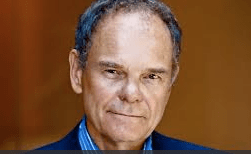 The featured guest of the evening at RSA was Don Tapscott, a Canadian futurist, advisor to heads of states and global organizations, who specializes in business strategy, organizational transformation and the role of technology in business and society. He is the author of Wikinomics, an international bestseller that was #1 on the 2007 management book charts and translated into 20 languages.
His books on the implications of emergent technologies for organisational strategies shaped my thinking over the years. Needless to say, I was thrilled to meet him the first time at RSA, and learn about his latest project, the Global Solution Networks (GSN) initiative. Watch the video of his talk, and you may get a glimpse of what enthuses me about the possibilities that this radically new model of global cooperation, problem solving and governance opens up.
At the core of the model there’s a taxonomy 9 types global networks, as follows, each having a significant impact in the world:
1. Policy networks, such as the International Competition Network
2. Operational and delivery networks like Crisis Commons
3. Knowledge networks, for example, TED or Wikipedia
4. Advocacy networks, like Kony 2012
5. Watchdog networks, e.g. Human Rights Watch
6. Platforms like Ushahidi, thesojo.net
7. Global standards networks such as the Internet Engineering Task Force
8. Governance networks like the Marine Stewardship Council
9. Networked institutions, e.g. the World Economic Forum
Don mentioned that any of the global networks can overlap with other network types, but each one belongs primarily to one of these categories. The characteristics of a Global Solution Network are:
- It consists of diverse stakeholders
- It addresses a global problem
- It makes use of transnational networking
- Its membership and governance are self-organized
Another is that it’s not based on alliances of nation states that are protectors of the national ego with a too narrow band of interest to successfully tackle our global challenges. As Don said:
“Often national self-interests take priority and make little room for the inclusion of authentic citizen voices, ignoring the self-organized civic networks that are congealing around every major issue. By slashing transaction and collaboration costs, the Internet is changing the deep structure of most institutions… Dispersed volunteers can create fast, fluid and innovative projects that outperform the largest and best-financed enterprises.”
Another intriguing observation that I picked up from his presentation was his point about cities that are becoming, in a sense more important than nation states. “Some of the most important governments in the world today are cities… That’s not to say that national or regional governments will go away…” His assessment is resonant with some of the observers of our global affairs, who talk about a shift in the center of gravity from a planet of nation states to a planet of cities. They include Shlomo Angel, author of the Planet of Cities and Marilyn Hamilton, author of the Integral City, whose work I referenced in my blog about Living into the Master Code of the Human Hive.
One more thing. In the Q&A following his talk, I asked Don what can happen when the 9 types of global solution networks start synergizing? He replied, saying that each of these networks is a tool to tackle a global problem, and mentioned the global monetary system that would need the involvement of all. In the Q&A, we didn’t have much time to unpack the meaning of my question, so I use this space for that.
If I am looking at each of 9 kinds of networks, what I see is a platform for developing an organ (and associated capacities) of the emerging, global metabeing. For example the policy and standards networks perform important coordination function of the global nervous system. The operational and delivery networks, like the Crisis Commons that connect people to help those in need, exercises a healing function. Platforms are nodes specializing in capacity building for the metabeing’s self-organization that can take emergence to scale.
Knowledge networks that create and deliver mission-critical new knowledge, play the role of the sensing, learning, and meaning making organs. They evolve using the same mechanism of the “neurons who fire together, wire together,” as our knowledge and memory do in our biological brain. Of course, those sensing, learning, and meaning making organs exist inside any of the 9 types of networks, otherwise they couldn’t perform their function. But knowledge networks are specialists in developing those capacities for the whole, even if they may not (yet) see themselves in that way.
For effectively dealing with the global mess we don’t only need all of those networks in the Tapscott taxonomy, but also, their synergistic collaboration. Only then we’ll have a chance to match the complexity of the “global problematique” (coined by the Club of Rome) with the requisite variety in humankind’s connected intelligence. (In that context it may be interesting to glance through the answers I received to my question on Quora about What are the key factors to consider in cultivating collective sentience at increasing scale?)
Before humankind, the global metabeing, can awaken to its sentience, the global solution networks need to become holoptical. “Holopticism is a combination of Greek words holos (whole, holistic, holography…) and optiké (vision)… A holoptical space is a space in which each participant gets a live perception of the Whole. Each player, thanks to his/her experience and expertise, relates to this Whole in order to adjust his/her actions and coordinate them with others’ moves. Therefore there is an unceasing round trip, a feedback loop that works like a mirror between the individual level and the collective one.” (Jean-François Noubel)
If we replace the “individual and collective” levels in the sentence above with the level of “network types and the Global Solution Networks, as whole,” then we open the possibility to envision the emergence of a global-scale connected intelligence. Nothing less will suffice to navigate our beautiful Spaceship Earth, through the turbulent times of today, to a tomorrow of higher-level complexity, harmony and prosperity for all.







 Blog of Collective Intelligence (since 2003)
You must be logged in to post a comment.