
See on Scoop.it – The Wisdom Frontier
Davos, as someone else has said, is where the rich gather to work out how to get richer.
See on brightgreenscotland.org
See on Scoop.it – The Wisdom Frontier
Davos, as someone else has said, is where the rich gather to work out how to get richer.
See on brightgreenscotland.org
See on Scoop.it – The Wisdom Frontier
Humanity has become more and more connected, from the national level to the personal. Yet are we becoming better able to collectively harness our information, goals, and ideas to lead to wise decisions? How could we best enhance humanity’s collective wisdom to help overcome the global challenges of the next century?
There are many possibilities, from familiar ideas or institutions such as freedom of the press, the adversarial legal system, Wikipedia, and global governance, to less well known ones like prediction markets or Aumann agreement. Most valuable would be high-leverage insights: those that could be easily implemented yet could make a global difference.
The Future of Humanity Institute at Oxford University wants to get young researchers thinking about these big questions. Choosing a PhD thesis topic is one of the big choices affecting the direction of your career, and so deserves a great deal of thought. To encourage this, we are running a slightly unusual prize competition. The format is a two-page ‘thesis proposal’ consisting of a 300 word abstract and an outline plan of a thesis on a topic related to enhancing humanity’s collective wisdom. We will publish the best abstracts on our website and give a prize of £2,000 to the author of the proposal we deem the most promising or original.
Enquiries to futuretech@philosophy.ox.ac.uk
Download poster [PDF].
Winners of the Crucial Considerations for the Future of Humanity Thesis Abstract Competition can be found here.

I am because we are. I am writing this blog because a friend called my attention to Blog Action Day. I’m a blogger because somebody invented the blog and Tim Berners-Lee invented the World Wide Web. I am who I am because countless generations of humans lived and died, transmitting genes and memes to the next one.
How can I begin to give back something to evolution for the gift of being alive in this time of transition, when a better world became possible thanks to millions of women, men, and youth working for it all over the planet? May this blog be one of the new beginnings, hardly perceptible in the grand scheme of things, yet one that can provide nourishment for our journey together.
Every journey starts with a passionate question. Mine is this: how can we grow new practices and institutions to help bring into play more of who we are? Wondering, why is that important to me? Because I long to realize the fullness of what I can be, and am smart enough to know that it’s possible only if we all have a chance for that.
What does bringing into play more of who we are mean? Fundamentally, it’s about participating in the gift flow of Life. Awakening and giving room to more parts of who we are can refer to a watershed event at two different scales.
1. At a personal level, it means breaking free from the dictatorship of one dominant identity, e.g.: “I am a lawyer,” “I’m a mother,” etc and honoring the multifaceted human being we truly are. That can be a “benevolent dictator,” as in the case when we’re truly proud of being a good lawyer or mother, nevertheless if it fills our identity space to the exclusion of others it is still impoverishing us and robbing us of our fuller potential.
2. At the level of social evolution, it means ending millennia of repressive division of labor that defined human beings by their rank in a society of classes or by their job description as a cog in the machine. That game is inching towards its end, and we can see on the horizon an emergent new reality, where our social institutions will be designed to maximize the chance of all to realize their full potential. I’m working for a world, where that will be the new norm in education, production, governance — in all areas of how we organize ourselves.

Cover via Amazon
Since I first heard it from Marilyn, it kept working on me and inspired me to make it a navigational device of my life. Of course, the three principles are something that most of us honor to some extent anyway, but naming them, and naming them as the Master Code of the “human hive”, gives access to a new depth of relating to them.
The Code became my meditation object; I enjoy holding it in my consciousness, at least once a day, as a question: how do I live into it today; what is each of the three principles asking me to do and be, today?
Living into the Code starts not with seeking answers to those questions with my left brain, my planning and scheming mind, but gently yet passionately holding and contemplating them till clear answers emerge from my soul’s direction. That is also the beginning of taking care of myself, for the day.
What could become possible if we started practicing the ” Take Care of Yourself, Take Care of Each Other, Take Care of This Place” principles? Well, the only way to find out is by doing it. So, I started. While the principles are deceptively simple and universal, the practices are as varied as the people inventing and working with them.
For example, for me, “Taking Care of Myself” also includes that I tune in:
• the demands of an aging body for attention, and find joy in the intimate observation of what kind of exercise can help my shoulder healing a torn ligament.
• the needs of the neighboring niches in the ecosystem of my relationships, to discover which ones appeal me the most and energize my response.
• the awareness of my moods, to rapidly get myself unstuck when that’s what is called for.
• the multiple dimensions of my self, from the biological and psychological, to the social, digital and spiritual, to honor my longing to experience as deeply each dimension as I can.
Practicing “Take Care of Each Other,” for me includes, for example:
• little things, like taking time to look up the URLs to insert in this blog to save you some time of locating those references
• or bigger ones, such as serving those, who serve the most; bringing my talents to amplify the work of changemakers operating at a glocal scale
Finally, my practices of “Taking Care of This Place” are evolving with the expansion of the size of the place I consider my home. They connect me with a nested hierarchy of “these places”, the instances of the “we”, from my home to the town I live to our beloved planet. They all call for a different kind of caretaking. For instance, from turning my office into a work sanctuary, to supporting the amazing wildlife reserve within our city limits, to helping my systems thinker colleagues identifying the leverage points for the transition from our ego-civilization to an eco-civilization…
Most of us are too busy just living our life to observe what I call a “practice:” sustained or regular activity to stop a bad habit or instill a new, helpful one. Paying attention to what we pay attention to, is one of the first practices worth engaging in, with a playful attitude.
I’m very curious about your practices of the three “taking care of” principles. Let’s discover the Power of We through sharing our practices and staying attentive to what may emerge from it. To help the game get rolling, here are three challenge questions to choose from:
A. What will you be ready to do in the next three months to live as deeply into the Master Code, as you can?
B. How will you boost the positive impact of your taking care of this place, 10-fold, in the next 6 months? (Here is a global-scale example from the IC2OC conference, where the Master Code was a core principle in its creation and its impact. However, yours doesn’t have to be at that scale to qualify.)
C. What will it take to move from the current to the next stage on your “taking care of” journey?
If you choose A, list out the actions and their desired impact for each of the 3 scales of the game?
If you choose B, how would you know when you achieved the 10x?
If you choose C, use the map linked from that question to describe where you are and where you are heading.
The rewards of this game come at three levels, regardless which play you choose:
1. Landing smoothly on the next level of you
2. Your augmented capacity to make a positive difference in the world
3. Becoming part of a vibrant community of mutually supportive relationships with fellow Taking-Carers
Feel free to use this blog as your journey log, or if you have your own blog, post your replies there and come back here to make a link to them. Let’s develop further together the best game on earth, the game of co-evolving consciously through living into the Master Code of the Human Hive.
I’m a recovering a radical connectionist. I used to believe that the scope of the we-space and the depth of our CI will increase as more of us link up into the nervous system of the emergent Civilization 2.0. I still do but with a significant refinement: the systems and structures of Civ 2.0 already in process have a much vaster variety than I/we can fathom, let alone connect with directly.
 The new strategy I pursue is based on perceiving that emergence as coming forth from an ecosystem of zillions transformational initiatives and projects. Then I navigate the neighboring niches, looking for naturally occurring functional alignment between my gifts to the whole and theirs. When found, structural coupling happens effortlessly. Then, the music starts…
The following page is republished from “The Future We Deserve.”
 Maybe we should not talk about ‘economy’ any longer. A term about specialization, competition, profit. Every time we try to squeeze new concepts into this mindset we fail.
We are witnessing something unprecedented. We are observing how people are taking initiatives and creating the world they want to see. We are seeing how the Internet allows us to connect peers and empower individuals. We want to co-create, to engage with people and projects no matter where they are, we are drawn to collaborate, co-design, form communities, and imbue our actions with meaning and values. Are we headed towards a global collective intelligence, coagulating our endeavours to form one single big organization, with the Internet being something like the nervous system?
Maybe we are. We have got the tools, it’s time to connect the pieces together. Suresh Fernando stepped up to the crowds and said “let’s work as ecosystems”. Isn’t this beautiful? Ecosystems thrive on diverse webs of relationships by exchanging nutrients. The emergent pattern of a new paradigm for how we interact, facilitated by the Internet? We could all see ourselves as seeds of a thriving ecosystem. Could we imagine fermenting projects which could start creating the relationships for the ecosystem to unfold?
I believe there’s plenty of nutrients at our fingertips, which can be used to form new relationships. Start working with what we have, and evolve from there. Make connections with those to whom we have affinity. I believe this approach provides the right context for emergence to happen. A cell in my finger does not need to be directly related to one in my toe, nevertheless their functions allow my body to work as a whole. As caretakers of this ecosystem we learn to take stewardship of our communities, our assets, our planet.
Key will be infrastructure which can connect people who want to work together. Tools that make it easy for groups to self-organize, to exchange, create content and work items, and get things done. Arrangements that provide the legal frameworks for people to come and work together, no matter where they live, assisted by open capital allocation agreements. Transcend what we used to see as an enterprise or an organization. If these tools are set up in true P2P manner, then nobody can stop this wave. No governmental or multinational entity can step in and impose their interests.
Any individual can then become a contributor to such an enterprise – or any, really. And within this enterprise, democratic structures and decision making processes allow members to define the value they want to create. Thus, investors, contributors, mentors, etc. all share the same value base; profit ceases to be the measuring stick for success or motivation. Communities arise around shared values.
If we combine such infrastructure with open source principles, we have immense power at our hands. We could think of ‘centers of excellence’, offering everything needed to disseminate knowledge about renewable energies, clean technology, organic agriculture, permaculture – you name it. If this knowledge is freely accessible, distributable, and replicable, local and cultural adaptations to technologies become possible. Open hardware and distributed manufacturing could join in being providers of toolboxes for resilient, thriving communities – what Wael Al Saad calls ‘holistic eco-villages’, decentralized connected entities embedded in their natural environment and using locally available resources. Elements to help leapfrogging traditional environments into sustainable, interconnected nodes. Likewise sources of inspiration and know-how for people transitioning from oversized ecological footprints to healthy relationships with our environment.
As the “Coalition of the Willing” movie postulates, we could also think of “Open Innovation Centers”, in which people come together to design collaboratively and create value. We just need to create the environments for people to talk and work together. What would we be able to come up with?
A friend of mine wrote in an email, “I’m in a wonderful space of confusion where I feel I’m shape shifting – my attention drawn in many new directions and calling forth different aspects of my being.”
Thinking that his predicament maybe sometimes yours too, I publish below my reply to him.
Blessed confusion, indeed! The multiplicity of juicy opportunities to prioritize is what happens when one lives on the edge of the evolutionary wave. In that process of prioritizing, something else also happens:
The awakening heartmind of humankind is organizing itself through the web of connections arising from our choices. For it, we are processors of opportunities for co-creation, collective intelligence and wisdom, at gradually increasing scale.
How do we rise to the task of sorting out our life/work project priorities, when seen in that transpersonal scope? How do we support best the planetary metabeing’s self-organization into Humanity 2.0, through our individual and collective choices?
First, by realizing that the implications of the apparently personal choices are, in fact, far from being only personal. They are vectors that affect the unfolding of the human story from this day on.
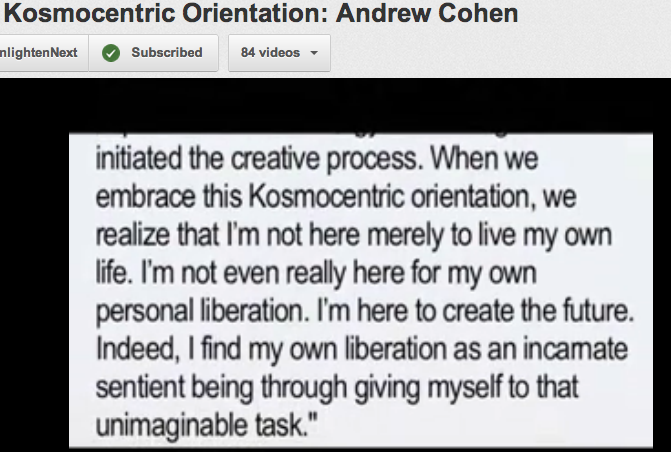 With a kosmocentric orientation we can tap into the field of Zeitgeist, of both our collective consciousness and unconscious, and receive guidance to making choices about our life.
So, how do we do that? Isn’t that an important question worth inquiring into together? Here’s my contribution to an eventual co-inquiry.
After completing the list of directions that attract my attention, I transform it into a large circle, where I can draw lines across the directions represented by small circles (nodes) on the periphery of the larger one. Each by-directional link represents some sort of (potential or actual) flow between those nodes. They can stand for information flows, value flows, trust flows, etc.
When I have more time on hand and more curiosity of the nature of the web of relationships and associated opportunities that I am the fulcrum of, then I portray those different types of flows with different colors. Naming the links with labels (e.g.: “X node delivers Z value to Y node”) can also help our making sense and discovering interesting patterns.
That kind of lifework project diagramming allows me to:
As I mentioned earlier, in that process of prioritizing, something else also happens: the metabeing’s self-organization through our personal choices.The following quote sheds some light on the relationship between the personal and the meta perspectives.
“Whatever arises is the manifestation of Being and always has a meaning… The presentation of the dynamism of the Being is happening through the filter of our ordinary knowledge. Fixed beliefs, attitudes, and positions, mostly based on ego structures and defenses, impede and distort the flow…
What inquiry does is activate and invoke the optimizing thrust of the dynamism, inviting the Being to exhibit its hidden richness. Inquiring opens up our knowledge by challenging it, questioning it, understanding it… By understanding the distortions, we can see ad get to what Being is trying to unfold. At some point, that unfoldment will appear in pure manifestation — the direct, unobscured experience of true nature.” (Spacecruiser Inquiry, by A.H. Almaas)
The “Being” distinction in the work of Almaas, the spiritual teacher, refers to the Absolute. Nevertheless, the quoted idea is also relevant to our understanding how the fabric of our Emerging Planetary Reality weaves itself through such ordinary acts as filling in our calendar with future events that reflect our sense of priority arising from the project diagramming described above.
If who we become will depend on the choices we make, then what does the quality of those choices depend on? Among other things, on such qualities of the shared-attention of the various communities we belong to, as its focus and depth, scope and steadiness, alertness and multiplexing flexibility. Those are attributes of both individual and collective attention that can be trained but that should be the subject of another blog.

Breakthrough emergence to a new form of civilization at a higher level of harmonized complexity is like spontaneous combustion.
The more transformational movements get exposed to and enter into functional alignment with each other, the closer is the tipping point.
“Combustion begins if a sufficiently strong oxidizer, such as oxygen, is present.” (Wikipedia) The oxidizer of social emergence is a collective sensing and meaning making organ of the movements of transformation.
That’s why I am collaborating on the development of The Future of Occupy website and newsletter.
 Long-time readers of my blog may remember a post about the collective intelligence of imaginal cells, which was about how emergence is using certain cells in the caterpillar-turned-into-plasma for giving rise to the butterfly, and what that may mean for the evolutionary agents of social transformation. Now the “imaginal cells” metaphor itself transformed into “imaginal souls,” the main actors of an infinite game taking off in Silicon Valley and the San Francisco Bay Area, the birth place of so many cultural, technical, and social innovation. It is a brainchild of Bill Veltrop, a veteran of the organizational transformation movement, and social visionary extraordinaire. The essence of his new initiative, in his own words, is: Continue reading
> all semantically linked, so for example, it could be built so that it showed all organizations, and then listed specific projects they are working on or in support of or things they are associated with.
> providing a snapshot overview of the entire ecosystem, and making it very easy for projects and people to become aware of one another and share data instead of duplicating it over and over.
In a similar vein, I wrote about some steps towards crowdsourcing the mapping of the movements & tribes that model the social practices of a positive future here.
The particular possibility that has been attracting my attention the most is to increase the self-awareness of all fields of transformation and to create/cultivate an emergent platform that can act as a rocket booster for our collective intelligence and wisdom.
> The thing i’m envisioning would be a lot of work to set up, but then it would be intelligent… if these values were defined, they could then be entered into this database, and it would show you the 9 projects that were related/similar/identical.
The thing that Venessa is envisioning is the thing that any self-organizing global-scale collective intelligence need if it is to be holoptical.
> If there was more granular information about all of this, and it was openly available and easy to navigate, we’d have a much more effective method of allocating resources to efforts that will go furthest.
Envisioning and prototyping “more effective method of allocating resources to efforts that will go furthest” is both a measure and a condition for the metabeing to truly become intelligent. Nothing less will keep us from becoming an aborted evolutionary experience.
If so, then need to shift, sooner or later our scaffolding environment from The Next Net Google Group to, at least, a Drupal-like content management system/framework. The sooner would be better because the conversation is already richer than what this tool can do justice to.

 Venessa Miemis
 Blog of Collective Intelligence (since 2003)
You must be logged in to post a comment.